What Is AI Automation? The Complete Business Guide (2026)
Artificial Intelligence (AI) is transforming the way businesses operate. From answering customer questions instantly to automating repetitive administrative tasks, AI automation has become a key driver of productivity, efficiency, and business growth.
Whether you're a startup, a growing SME, or a large enterprise, implementing AI automation can reduce manual work, improve decision-making, and allow your team to focus on high-value activities instead of repetitive processes.
In this comprehensive guide, you'll learn what AI automation is, how it works, its business benefits, real-world applications, implementation steps, common challenges, and how your organization can successfully adopt AI automation.
What Is AI Automation?
AI automation is the combination of artificial intelligence technologies and workflow automation to perform tasks with minimal human intervention.
Unlike traditional automation, which follows fixed rules and predefined logic, AI automation can analyze information, recognize patterns, understand language, learn from historical data, and make intelligent decisions.
Examples include:
Automatically responding to customer inquiries
Processing invoices without manual data entry
Qualifying sales leads
Extracting information from documents
Scheduling meetings
Predicting customer behavior
Generating reports
Routing support tickets to the correct department
Instead of simply automating repetitive actions, AI automation enables businesses to automate decision-making processes as well.
AI Automation vs Traditional Automation
Many people confuse AI automation with traditional automation, but they serve different purposes.
Traditional Automation | AI Automation |
|---|---|
Rule-based | Learns from data |
Fixed workflows | Adaptive workflows |
Requires predefined logic | Makes intelligent decisions |
Cannot understand context | Understands language and context |
Limited flexibility | Highly scalable and flexible |
Traditional automation works well for repetitive tasks with predictable outcomes. AI automation goes further by handling complex workflows that involve decision-making, natural language, and data analysis.
How AI Automation Works
An AI automation system typically combines several technologies to automate business processes.
1. Data Collection
The system gathers information from sources such as:
CRM platforms
ERP systems
Emails
Websites
Forms
Databases
APIs
Cloud applications
2. AI Processing
The AI model analyzes the incoming information by:
Understanding customer requests
Classifying documents
Identifying patterns
Extracting important data
Predicting outcomes
Generating responses
3. Workflow Automation
Once AI has processed the information, automated workflows perform actions such as:
Sending emails
Creating invoices
Updating CRM records
Assigning tasks
Notifying employees
Creating support tickets
Scheduling meetings
4. Continuous Improvement
Modern AI systems improve over time by learning from historical interactions and business data, making future decisions more accurate and efficient.
Benefits of AI Automation
Businesses across industries are investing in AI automation because it delivers measurable results.
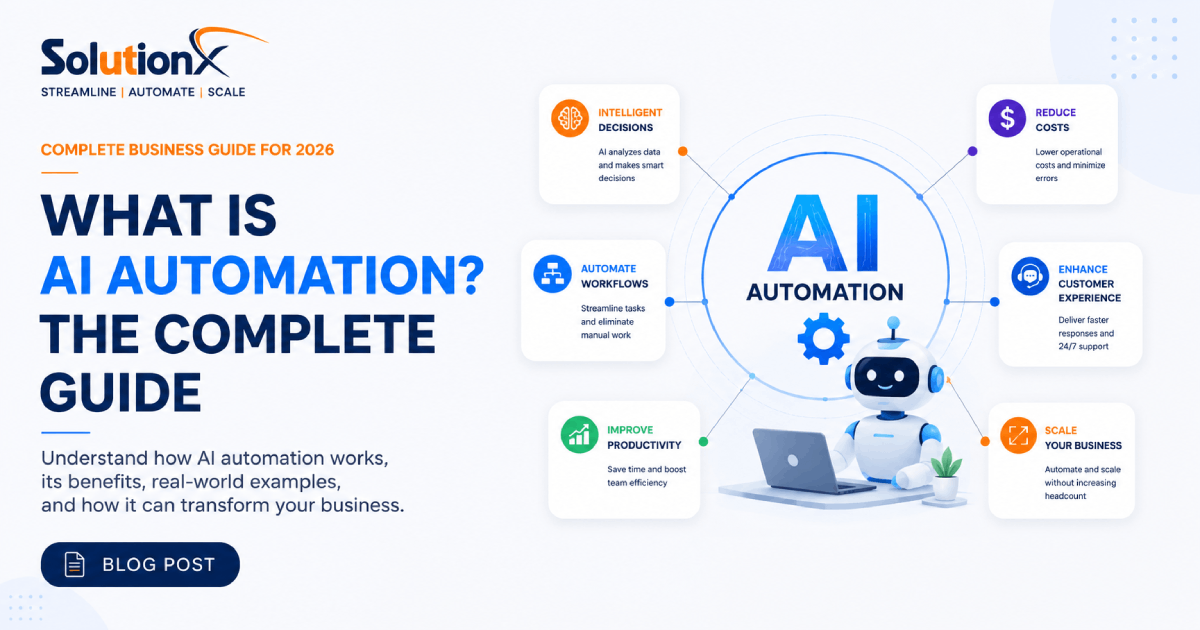
Increase Productivity
Employees spend less time on repetitive administrative work and more time solving problems, serving customers, and growing the business.
Reduce Operational Costs
Automation minimizes manual effort, reduces errors, and lowers operational expenses.
Improve Customer Experience
AI-powered chatbots and virtual assistants provide instant responses 24/7, reducing waiting times and improving customer satisfaction.
Faster Decision Making
AI analyzes large volumes of information within seconds, helping businesses make faster and more informed decisions.
Better Accuracy
Automated systems reduce human errors in data entry, reporting, and document processing.
Scalability
AI automation grows with your business without requiring proportional increases in staff.
Real-World AI Automation Examples
Customer Support
AI chatbots answer common questions, create support tickets, and escalate complex issues to human agents.
Sales
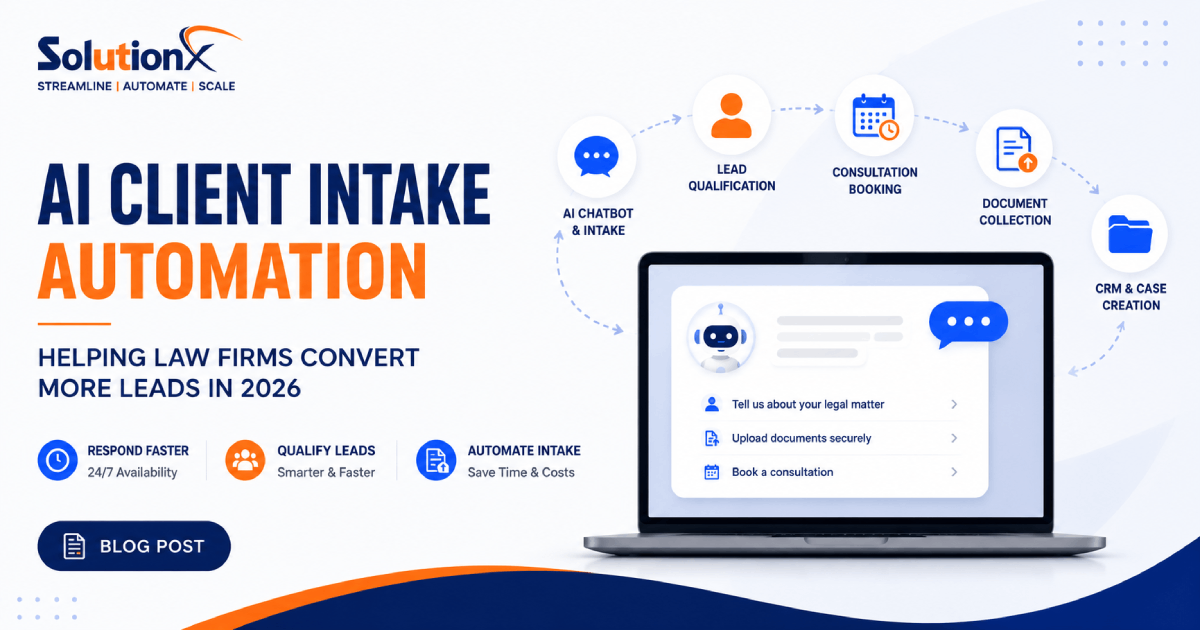
AI qualifies leads, schedules meetings, sends follow-up emails, and updates CRM systems automatically.
Marketing
Marketing teams use AI to:
Personalize email campaigns
Generate content ideas
Analyze campaign performance
Score leads
Recommend products
Human Resources
HR departments automate:
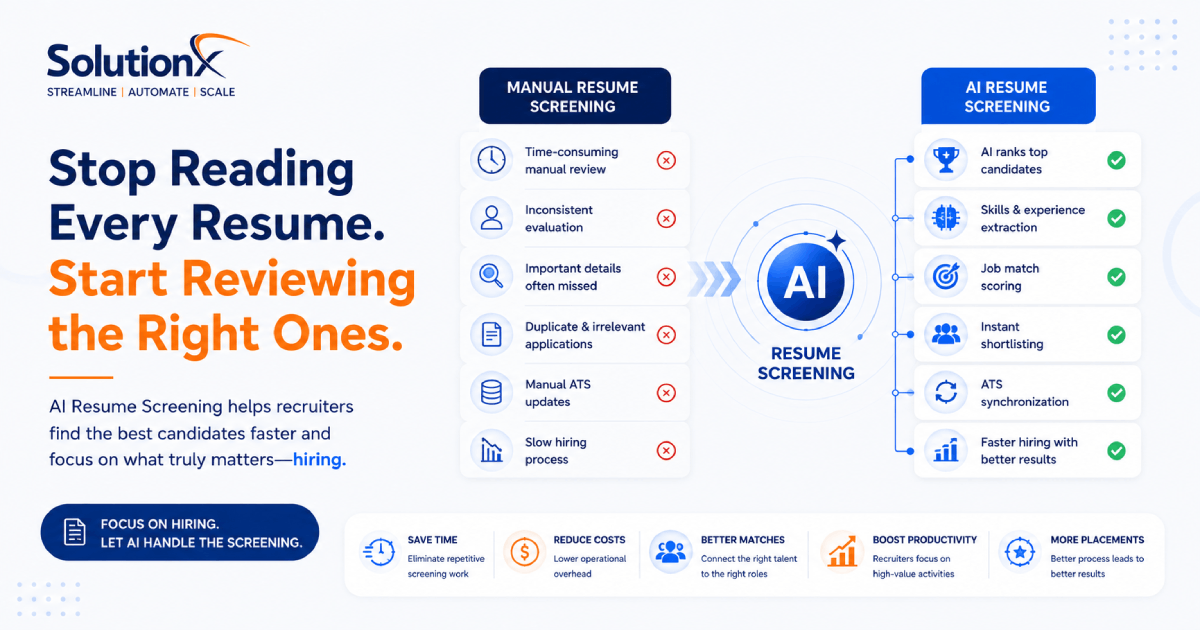
Resume screening
Candidate communication
Interview scheduling
Employee onboarding
Leave management
Finance
Finance teams automate:
Invoice processing
Expense approvals
Payment reminders
Financial reporting
Fraud detection
Operations
Operations teams automate:
Inventory management
Order processing
Procurement workflows
Logistics coordination
Performance reporting
Industries Using AI Automation
AI automation is no longer limited to technology companies.
Organizations across industries are adopting intelligent automation.
Healthcare
Appointment scheduling
Patient support
Medical documentation
Billing automation
Manufacturing
Predictive maintenance
Quality control
Inventory optimization
Production monitoring
E-commerce
Product recommendations
Customer support
Order tracking
Inventory forecasting
Real Estate
Lead qualification
Property inquiries
Appointment scheduling
Document processing
Financial Services
Loan processing
Risk assessment
Customer verification
Compliance monitoring
Education
Student support
Admissions workflows
Attendance tracking
Learning recommendations
Popular AI Automation Technologies
Successful AI automation solutions often combine multiple technologies.
These include:
Large Language Models (LLMs)
AI Agents
Machine Learning
Natural Language Processing (NLP)
Computer Vision
Optical Character Recognition (OCR)
Robotic Process Automation (RPA)
API Integrations
Workflow Automation Platforms
Together, these technologies enable businesses to automate both simple and complex workflows.
Common AI Automation Use Cases
Organizations frequently automate:
Customer service
Email management
Lead qualification
CRM updates
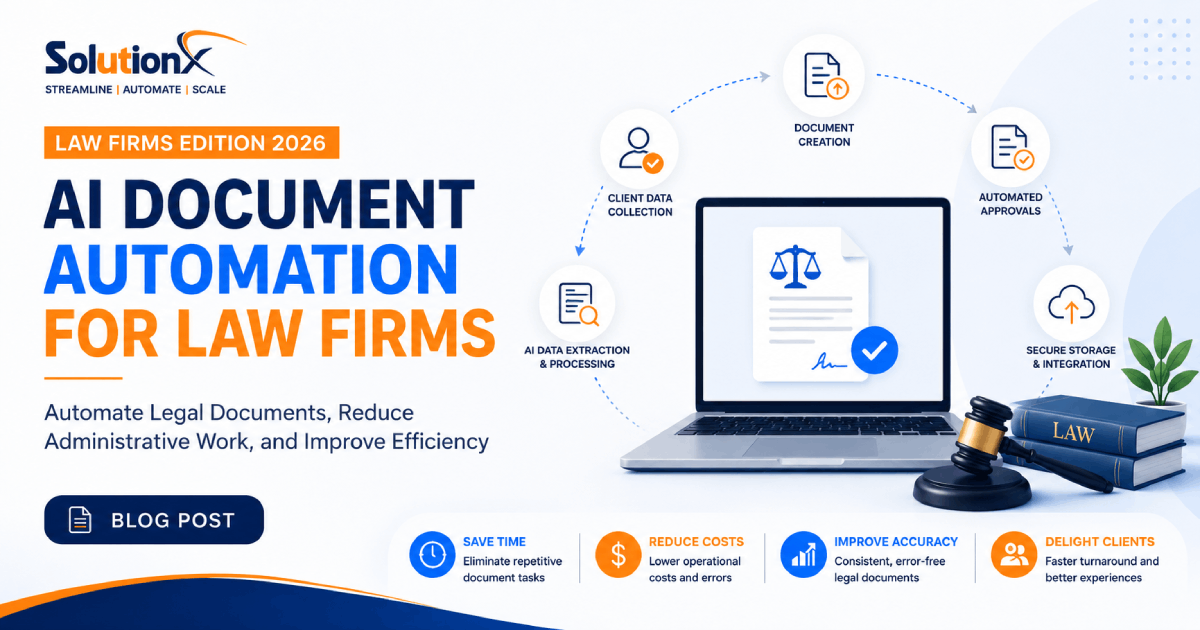
Document processing
Employee onboarding
Invoice approvals
Report generation
Data synchronization
Meeting scheduling
Social media management
Knowledge management
How Much Does AI Automation Cost?
The cost of AI automation depends on several factors, including:
Business size
Workflow complexity
Number of integrations
Required AI capabilities
Custom software development
Security requirements
Ongoing maintenance
Simple workflow automations may require only a few integrations, while enterprise-level AI solutions often involve custom development, multiple systems, advanced analytics, and dedicated infrastructure.
The best approach is to begin with high-impact workflows that provide measurable ROI before expanding automation across the organization.
How to Implement AI Automation Successfully
Step 1: Identify Repetitive Processes
Look for tasks that consume significant employee time and involve repetitive actions.
Step 2: Define Business Goals
Determine whether your objective is to:
Reduce costs
Increase productivity
Improve customer satisfaction
Reduce errors
Scale operations
Step 3: Evaluate Existing Systems
Review your CRM, ERP, databases, APIs, and software platforms to identify integration opportunities.
Step 4: Design Intelligent Workflows
Map each workflow carefully, including inputs, AI decision points, automations, approvals, and expected outputs.
Step 5: Test Before Deployment
Pilot your automation with a limited group of users, gather feedback, and optimize performance before full rollout.
Step 6: Monitor and Improve
Measure KPIs such as:
Processing time
Cost savings
Customer satisfaction
Error rates
Employee productivity
Return on investment
Continuous optimization ensures long-term success.
Common AI Automation Mistakes
Many businesses rush into automation without a proper strategy.
Avoid these common mistakes:
Automating inefficient processes
Choosing tools without a clear business objective
Ignoring employee training
Poor data quality
Lack of security planning
Not measuring ROI
Failing to integrate existing systems
A successful AI automation initiative starts with well-defined processes and measurable business goals.
Frequently Asked Questions
What is AI automation?
AI automation combines artificial intelligence with workflow automation to perform tasks, analyze information, and make intelligent decisions with minimal human intervention.
Is AI automation only for large companies?
No. Small and medium-sized businesses can also benefit from AI automation by improving efficiency, reducing costs, and scaling operations.
Can AI automation replace employees?
AI automation is designed to automate repetitive tasks rather than replace people. It allows employees to focus on strategic, creative, and customer-facing work.
What's the difference between AI automation and RPA?
Robotic Process Automation (RPA) follows predefined rules, while AI automation can understand language, analyze data, and make intelligent decisions.
Which business processes should be automated first?
Organizations typically begin with customer support, lead management, document processing, CRM updates, reporting, and administrative workflows.
How long does implementation take?
Implementation timelines vary depending on workflow complexity, integrations, and business requirements. Small automation projects may take a few weeks, while enterprise implementations can take several months.
Final Thoughts
AI automation is rapidly becoming a competitive advantage for businesses of all sizes. By combining artificial intelligence with intelligent workflows, organizations can reduce manual work, improve operational efficiency, deliver better customer experiences, and scale faster.
The most successful companies don't try to automate everything at once. Instead, they identify repetitive, high-impact processes, implement automation strategically, measure results, and expand gradually.
Whether your goal is improving customer support, streamlining operations, automating sales processes, or integrating business systems, AI automation provides a practical path toward increased productivity and sustainable growth.
Organizations that begin investing in AI automation today will be better positioned to compete, adapt, and innovate in the years ahead.

Pro SolutionX
Technology & Growth Team
Pro SolutionX is a team of software engineers, AI specialists, automation consultants, and digital growth experts dedicated to helping businesses scale through technology, custom software, AI automation, cloud infrastructure, and data-driven digital strategies.